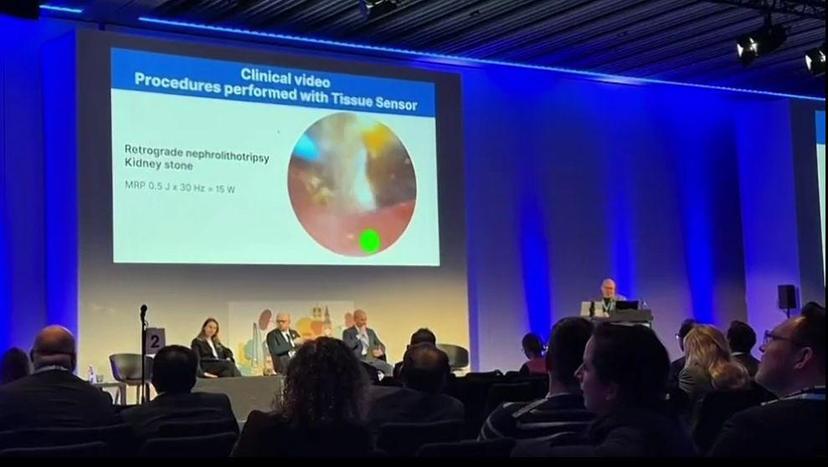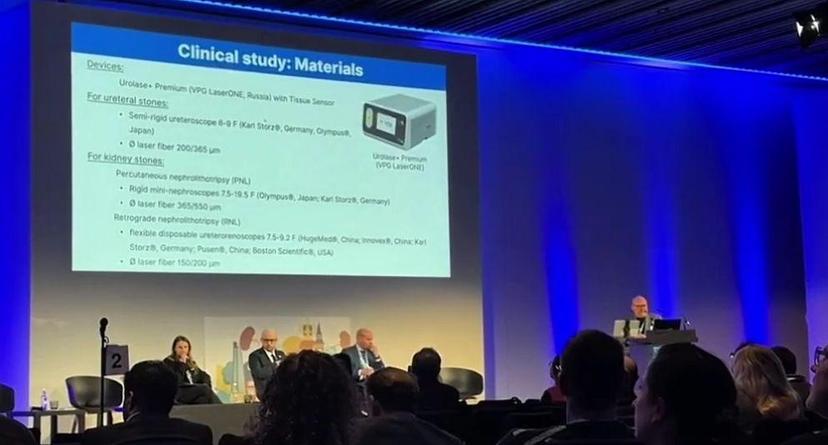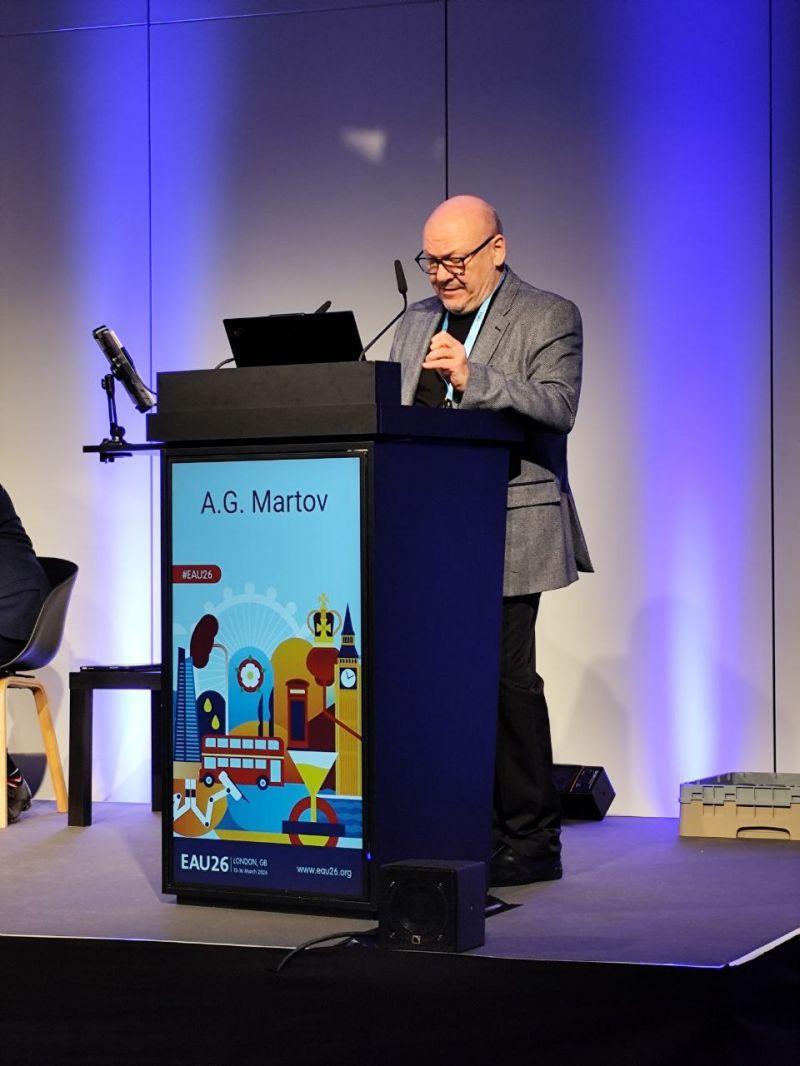
VPG LaserOne technologies were presented at the European Association of Urology Congress (EAU26) in London, one of the world's leading scientific events in urology. During the congress, Professor Alexey Martov shared clinical data and practical experience demonstrating how intelligent laser technologies and advanced thulium fiber laser (TFL) systems are contributing to safer and more efficient urological procedures.
Clinical evidence for intelligent laser systems
The presentations focused on the growing role of smart laser technologies in modern urology, highlighting how advanced software, imaging, and laser control systems can support clinical decision-making and improve procedural outcomes. The data presented reflected the continued evolution of TFL technology from a treatment tool into an integrated surgical platform.
Enhancing safety in lithotripsy with Tissue Sensor
One of the key topics was the clinical evaluation of Tissue Sensor, an automatic tissue-recognition technology integrated into VPG LaserOne systems. Presented within a multicenter lithotripsy study, the technology enables real-time differentiation between urinary stones and soft tissue at the fiber tip. When tissue contact is detected, laser emission is automatically interrupted, helping to reduce the risk of unintended tissue damage and supporting safer energy delivery during lithotripsy procedures.
Advancing AI-assisted decision-making in urology
Professor Martov also presented the Urolase Vision System (UVS), which combines endoscopic visualization with real-time laser data analysis. The platform supports intraoperative identification of stone characteristics and can automatically recommend laser settings based on procedural conditions. By integrating artificial intelligence with laser technology, UVS aims to support more standardized workflows and informed surgical decision-making.
Expanding the clinical applications of TFL
Beyond stone treatment, the congress presentations demonstrated the expanding role of thulium fiber laser technology in soft-tissue surgery. Clinical experience with minimally invasive transurethral treatment of large and recurrent renal sinus cysts illustrated how TFL applications continue to extend beyond lithotripsy, creating new opportunities for minimally invasive urological interventions.
Contributing to the future of endourology
The presentation of VPG LaserOne technologies at EAU26 reflects the growing importance of clinically validated, intelligent surgical systems in modern urology. By combining advanced laser physics, real-time tissue recognition, and AI-assisted workflow support, these technologies contribute to ongoing efforts to improve procedural precision, safety, and efficiency for both surgeons and patients.